
Sharp X68000
Khám phá các trò chơi hay nhất trên Sharp X68000: danh sách game nổi bật, ngày phát hành, nền tảng hỗ trợ và thông tin cơ bản.
Giới thiệu Sharp X68000
Khám phá các game nổi bật trên Sharp X68000 – danh sách được tổng hợp tự động từ cơ sở dữ liệu VietRPG.
Top 16 game hay nhất trên Sharp X68000
Danh sách biên tập theo tiêu chí khám phá nội dung: mỗi game có thông tin phát hành, điểm đánh giá và mô tả ngắn gọn.
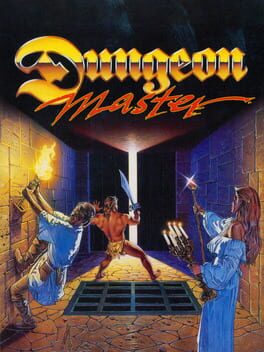
Dungeon Master
7.3TốtDungeon Master established several new standards for role playing and computer games in general. Dungeon Master was a realtime game instead of the traditional turn-based approach that was prevalent until then. Instead of using text-based commands to interact with the environment, players directly manipulated objects and the environment by clicking the mouse in the enlarged first-person view. Abstract Dungeons and Dragons style experience points and levels were eschewed in favor of a system where the characters' skills were improved directly via using them. It also introduced some novel control methods including the spell casting system, which involved learning sequences of runes which represented the form and function of a spell's effect. For example, a fireball spell was created by mixing the fire symbol with the wing symbol. This kind of attention to detail and focus on the user interface was typical of the game and helped create an often captivating sense of craft and ingenuity. Other factors in immersiveness were the then-revolutionary use of sound effects to indicate when a creature was nearby, and (primitive) dynamic lighting.
Role-playing (RPG)Phát hành: 15/12/1987Mở »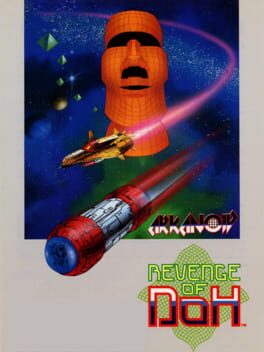
Arkanoid: Revenge of Doh
Arkanoid - Revenge of Doh (a.k.a. Arkanoid 2) is an arcade game released by Taito in 1987 as a sequel to Arkanoid. The mysterious enemy known as DOH has returned to seek vengeance on the Vaus space vessel. The player must once again take control of the Vaus (paddle) and overcome many challenges in order to destroy DOH once and for all. Revenge of Doh sees the player battle through 34 rounds, taken from a grand total of 64. NEW FEATURES: Revenge of Doh differs from its predecessor with the introduction of "Warp Gates". Upon completion of a level or when the Break ("B") pill is caught, two gates appear at the bottom of the play area, on either side. The player can choose to go through either one of the gates - the choice will affect which version of the next level is provided. The fire-button is only used when the Laser Cannons ("L") or Catch ("C") pill is caught. The game also features two new features for bricks. Notched silver bricks, like normal silver bricks, take several hits to destroy. However, after a short period of time after destruction, they regenerate at full strength. Fortunately, clearing a level does not require that any notched bricks be destroyed. Also, some bricks move from side to side as long as their left and/or right sides are not obstructed by other bricks. The US version features an entirely different layout for Level 1 that feature an entire line of notched bricks, with all colored bricks above it moving from side to side. The game features a mini-boss in the form of a giant brain, which will help you practice for DOH. Home versions of Revenge of DOH also featured a level editor, where players could create their own levels or edit and replace existing levels, with the exception of two levels: the mini-boss and DOH.
PuzzleArcadePhát hành: 1/6/1987Mở »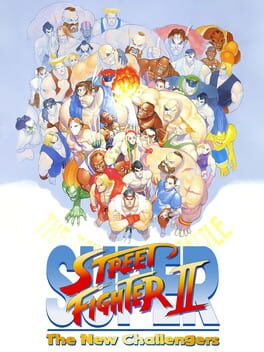
Super Street Fighter II: The New Challengers
Super Street Fighter II: The New Challengers is a 2D fighting game that expands the original Street Fighter II roster with four new characters: Cammy, Dee Jay, T. Hawk, and Fei Long. Players choose from 16 fighters, each with unique moves, to compete in one-on-one matches. The game introduces updated graphics, rebalanced gameplay, and new special moves, continuing the World Warrior Tournament storyline.
FightingArcadePhát hành: 10/9/1993Mở »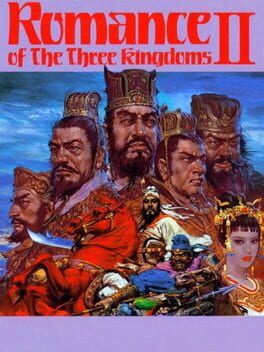
Romance of the Three Kingdoms II
The player takes control of a master, a general capable of commanding as many states as he can acquire, and, if successful, unifies China. As many as eight may play, but only one can succeed. There are five chronologically arranged scenarios. The first has China in its most disorganized period and the last has virtually all of China controlled by one of three generals. The precise requirements for success in each of these scenarios differs, but in all cases the goal is to rule as many states as possible. After the completion of any scenario but number five the game will automatically advance to the next. You may start the game at any scenario.
StrategyTurn-based strategy (TBS)TacticalPhát hành: 21/12/1989Mở »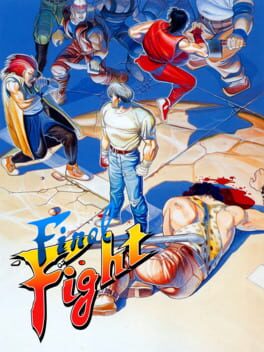
Final Fight
Final Fight is a side-scrolling beat-'em-up produced by Capcom. Final Fight can be played by up to two players simultaneously. Before the game begins, the player chooses between the three main characters: Haggar, Cody, and Guy. Each has his own fighting style and attributes. Health gauges are displayed for both player and enemy characters. The controls for Final Fight consist of an eight-way joystick and two buttons for attacking and jumping respectively. Pressing the attack button repeatedly when attacking an enemy or multiple enemies will cause the player character to perform a combo. The final blow of the combo can be changed to a throw if the player moves the joystick in the opposite direction just before landing it. The player can also perform a jump attack. Pressing the attack and jump buttons simultaneously allows the player to perform a special attack that strikes all surrounding enemies, but will drain a small portion of the player's health. Enemies can be grabbed simply by walking into one of them. When an enemy is grabbed, the player can perform a grab attack by pressing the attack button or perform a throw by tilting the joystick left or right. A thrown enemy can be tossed at another for additional damage. Items such as weapons, health recovery items, and items awarding extra points can be picked up by standing over one and pressing the attack button. Weapons have limited uses and will disappear if the player is disarmed by an enemy too much or when the player moves to a new area. Final Fight consists of six stages or "rounds", as well as two bonus rounds. Each round takes place in a different section of Metro City such as the Slums and the Subway, with most rounds featuring more than one level. At the end of each round the player will face a boss character unique to that round.
FightingHack and slash/Beat 'em upAdventurePhát hành: 25/11/1989Mở »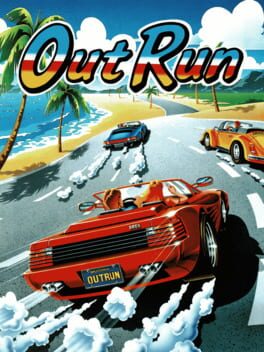
OutRun
OutRun is a racing game originating in the arcades. The player can race across varied terrain in a readily available Ferrari, complete with a female passenger, over a series of short tracks. Gameplay is viewed form just above and behind the car. The roads are full of sharp bends and hazards, contact with which can cause the car to roll and lose the player's time. On each section of track there is a fork in the road, allowing the player to choose which direction he or she wishes to go in. The player has to to complete five track sections in total, out of the fifteen in the game.
RacingArcadePhát hành: 25/9/1986Mở »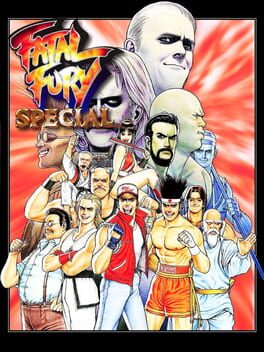
Fatal Fury Special
The GRANDMOTHER of all battles! 15 of the FATAL FURY series' top stars gather in the match of the millenium! Use the resurrected Geese Howard and Wolfgang Krauser in a dazzling arena! All you have ever wanted in a fighting game is here in FATAL FURY SPECIAL!
FightingPhát hành: 16/9/1993Mở »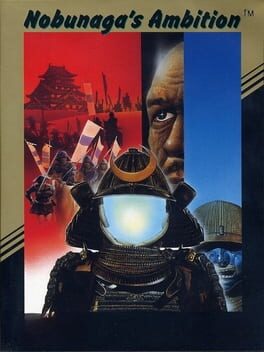
Nobunaga's Ambition
The second game in the series, previously released as Nobunaga's Ambition in the West. Players take on the role of one of the main characters of the period, Nobunaga Oda, Shingen Takeda, Kenshin Uesugi, or others and try to unite the 50 kingdoms of Japan, from Ezo in the north to Kyushu in the south, under their own rule.
Role-playing (RPG)SimulatorStrategyPhát hành: 1/12/1986Mở »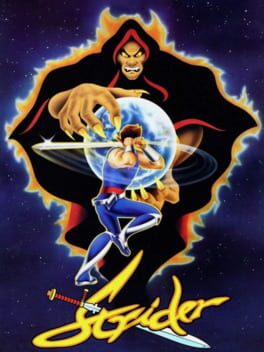
Strider
The controls of Strider consist of an eight-way joystick and two action buttons for attacking and jumping. The player controls Hiryu himself, whose main weapon is a tonfa-like plasma sword known as "Cypher". He can perform numerous acrobatic feats depending on the joystick/button combination used. Pressing the jump button while Hiryu is standing still will cause him to do a regular vertical jump, while pressing the jump button while pushing the joystick left or right will enable him to do a cartwheel jump. Hiryu can also slide under or through certain obstacles and enemies by first crouching down and then pressing the jump button. As well as his sliding move, both jumps can also be used to destroy weaker opponents. Hiryu is able to latch onto certain platforms, and climb across walls and ceilings using a metallic hook. While running down a sloped surface, Hiryu can gain enough momentum to allow him to do a longer cartwheel jump than usual. Numerous power-ups can be obtained from item boxes carried by certain enemies. These includes an extension to Hiryu's attack range that lasts for one hundred slashes, two types of health aids (represented by the kanji used to write Hiryu's name: 飛 and 飛竜), a max health extension (represented by the kanji 竜, the second character in Hiryu's name), an extra life, and a power-up that not only makes Hiryu invulnerable to attack but also increases his own attack abilities via shadow images of himself for 15 seconds.[3] Hiryu can also summon robotic companions known collectively as "options" that help him fight enemies. These consist of up to two mushroom-like droids, a saber-toothed tiger and a hawk, known individually as Option A, B and C respectively. The game has five stages: the Kazakh Soviet Socialist Republic (called "St. Petersburg" during the arcade game's attract sequence), the Siberian Wilderness, the Aerial Battleship Balrog (געלראב), the Amazonian Jungle, and the Grandmaster's lair itself, the Third Moon. Each of the stages is divided into a number of smaller sections, each with their own time limit and checkpoint location. The player has a three-point health gauge (which can be increased to five points with the health extensions. Hiryu will lose a life when either his health gauge is fully depleted, by moving him off the screen entirely (like falling into a bottomless pit) or when the game's timer reaches zero. It's Game Over when all of Hiryu's lives are lost, but the player can be given the opportunity to continue.
PlatformArcadePhát hành: 1/3/1989Mở »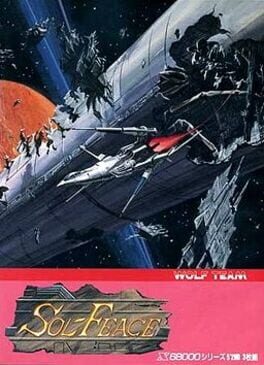
Sol-Feace
Sol-Feace is a typical 2D shooter with weapon powerups. The game features six levels: Sirius, Enemy Arsenal, ArtifiStar, Pluto Base, Almathea, and Final Battle.
ShooterPhát hành: 22/11/1990Mở »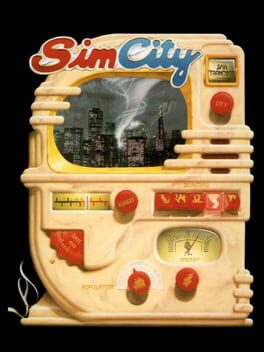
SimCity
SimCity, later renamed SimCity Classic, is a city-building simulation video game, first released on February 2, 1989, and designed by Will Wright for the Macintosh computer. SimCity was Maxis's second product, which has since been ported into various personal computers and game consoles, and spawned several sequels including SimCity 2000 in 1993, SimCity 3000 in 1999, SimCity 4 in 2003, SimCity DS, SimCity Societies in 2007, and SimCity in 2013. Until the release of The Sims in 2000, the SimCity series was the best-selling line of computer games made by Maxis.
SimulatorStrategyPhát hành: 3/10/1989Mở »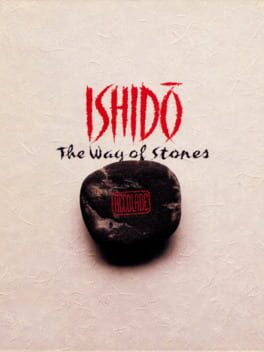
Ishidó: The Way of Stones
Ishido: The Way of Stones is a puzzle video game released in 1990 by Accolade and developed by Publishing International. It was designed by Michael Feinberg and programmed by Ian Gilman and Michael Sandige. Producer was Brad Fregger, and Brodie Lockard (the designer of the Shanghai computer game) contributed with graphics. "One misty spring morning in 1989, in the remote mountains of China's Han Shan province, a Mendicant monk of the Northern School of the White Crane branch of Taoism, walked silently out through the front gates of the Heavenly Peak Temple The monk carried a stone board, a set of seventy-two carved stone pieces, and an ancient scroll inscribed with brush and ink in elegant calligraphic script. He also carried with him a secret which had lain cloistered and hidden for thousands of years."
PuzzleStrategyPhát hành: 13/4/1988Mở »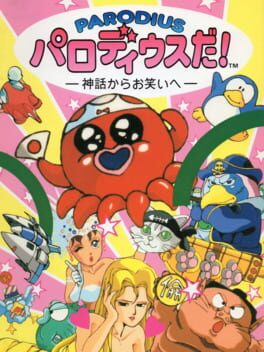
Parodius Da!: Shinwa kara Owarai he
An almost precise port of the arcade version, although the music has been changed to accommodate the computer’s MIDI generator. The status bar is also black rather than transparent.
ShooterArcadePhát hành: 19/4/1991Mở »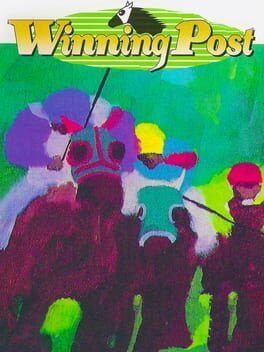
Winning Post
Winning Post lets the player take control of a stable of horse, breeding and training them for the ultimate goal, to win the French Grand Prix. The player can hire breeders, trainers and jockeys and race in over 240 different races to earn more money to buy even better personnel and breed faster and stronger horses as well as keeping their horses healthy. Players can also bet on races as well. The gameplay consists of choosing options before races, such as choosing which horses to train and what regiment they undertake, view stats, hire personnel and place bets. However the player has no controls over races and cannot participate and only view as a spectator.
RacingSimulatorSportPhát hành: 14/1/1993Mở »
Lodoss-tou Senki: Fuku Zinduke
A Record of Lotoss War turn-based strategy game for the Sharp X68000 and MSX.
Role-playing (RPG)StrategyTurn-based strategy (TBS)Phát hành: 26/4/1989Mở »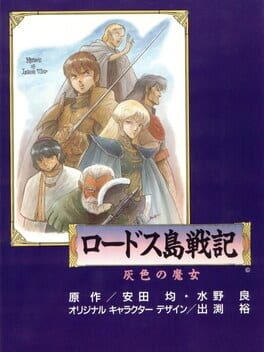
Record of Lodoss War: Haiiro no Majo
Đang cập nhật mô tả.
Role-playing (RPG)Phát hành: 31/12/1991Mở »
Bài viết liên quan đến Sharp X68000
Chưa có bài viết liên quan cho nền tảng này.