PoE 2 Crafts: The Complete Runeforging & Runic Ward Guide for Patch 0.5
Master PoE crafts in patch 0.5: Complete Runeforging & Runic Ward guide. Learn verisium farming, ezomyte runesmithing, unique upgrades & crafting strategies.

PoE 2 Crafts: The Complete Runeforging & Runic Ward Guide for Patch 0.5
Path of Exile 2's 0.5 patch—Return of the Ancients—rewrote the crafting rulebook. If you've been sleeping on PoE crafts mechanics since launch, now's the time to pay attention.
The Runes of Aldur league introduced Runeforging, a progression-based system that fundamentally changes how you gear your character, defend yourself, and interact with the endgame. This isn't optional—it's the backbone of patch 0.5 progression. Whether you're crafting your first Runeforged piece or min-maxing a build with Kalguuran uniques, this guide covers everything you need to know.
What Is Runeforging? The New Crafting Foundation
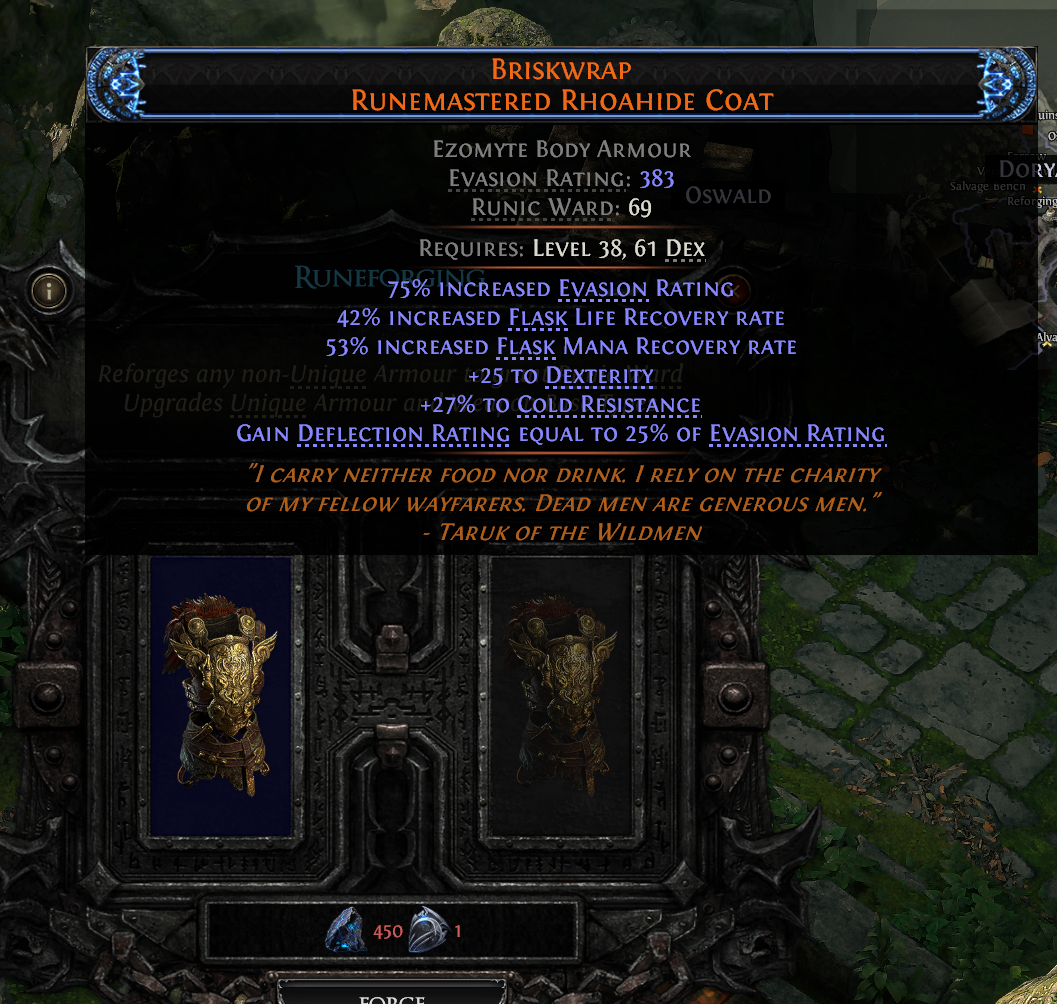
Runeforging is the headline feature of 0.5. It's a gear enhancement mechanic that consumes Verisium—a new currency dropped exclusively from Ezomyte Remnant encounters—to add Runic Ward to armor pieces and upgrade unique items. Unlike the old Recombinator system (which GGG deleted entirely), Runeforging offers predictable, strategic upgrades rather than gambling.
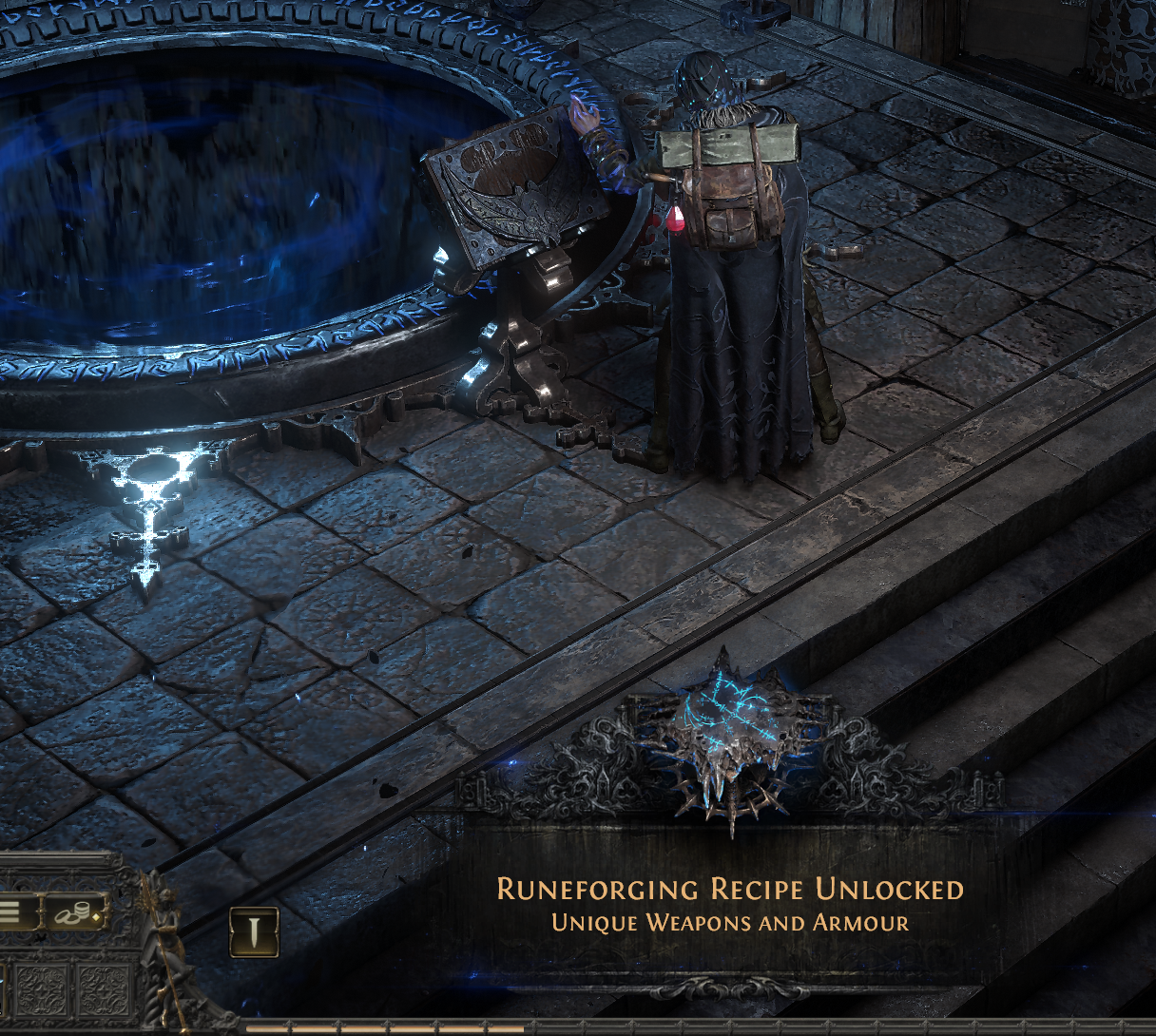
The system unlocks early. After meeting Farrow in Act 1, you gain access to the Verisium Anvil. From that point forward, any armor you craft or find can be Runeforged. The cost? Verisium. The reward? A defensive layer that literally saves your life when you hit 1 HP.
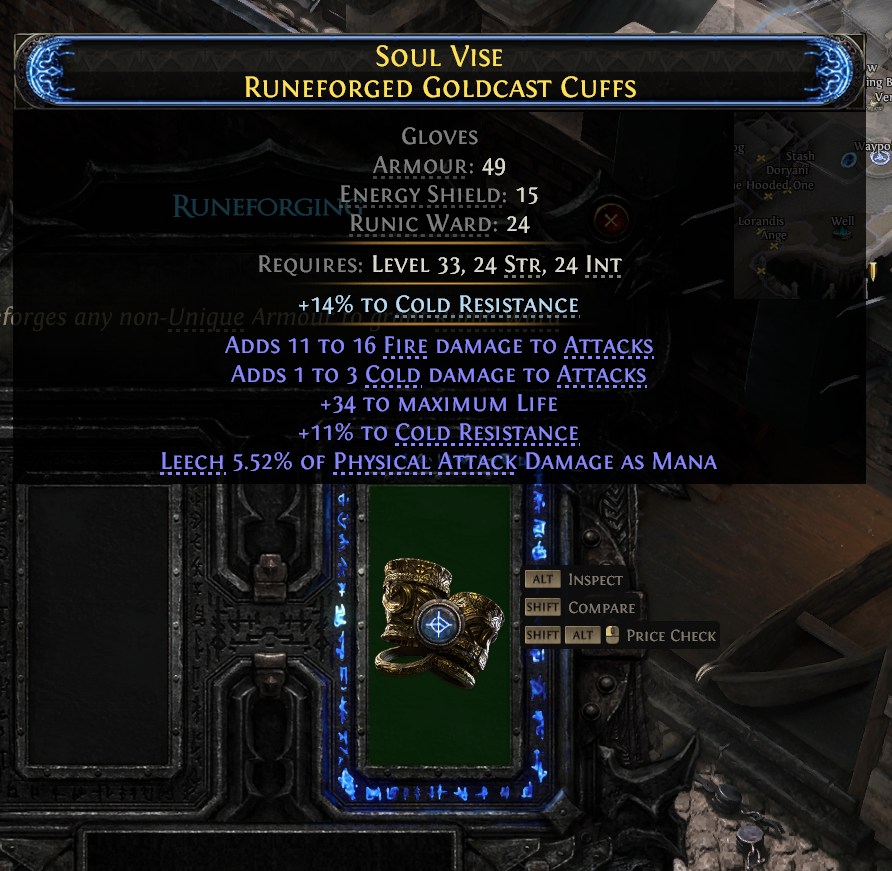
Here's the critical mechanic: items below item level 55 receive Runic Ward for free—no stat loss. Items at ilvl 55 and above trade some base defenses (armor, evasion, or energy shield) for Runic Ward. The higher the item level, the bigger the defense trade-off. This creates an actual decision point: do you need Ward more than raw defenses? Most of the time, yes. Sometimes, no. That tension is the entire game now.
The Three Tiers of Runeforging Unlocks
Runeforging doesn't open all at once. GGG gated it across three acts, forcing you to engage with Farrow's quests.
Act 1: Armor Runeforging
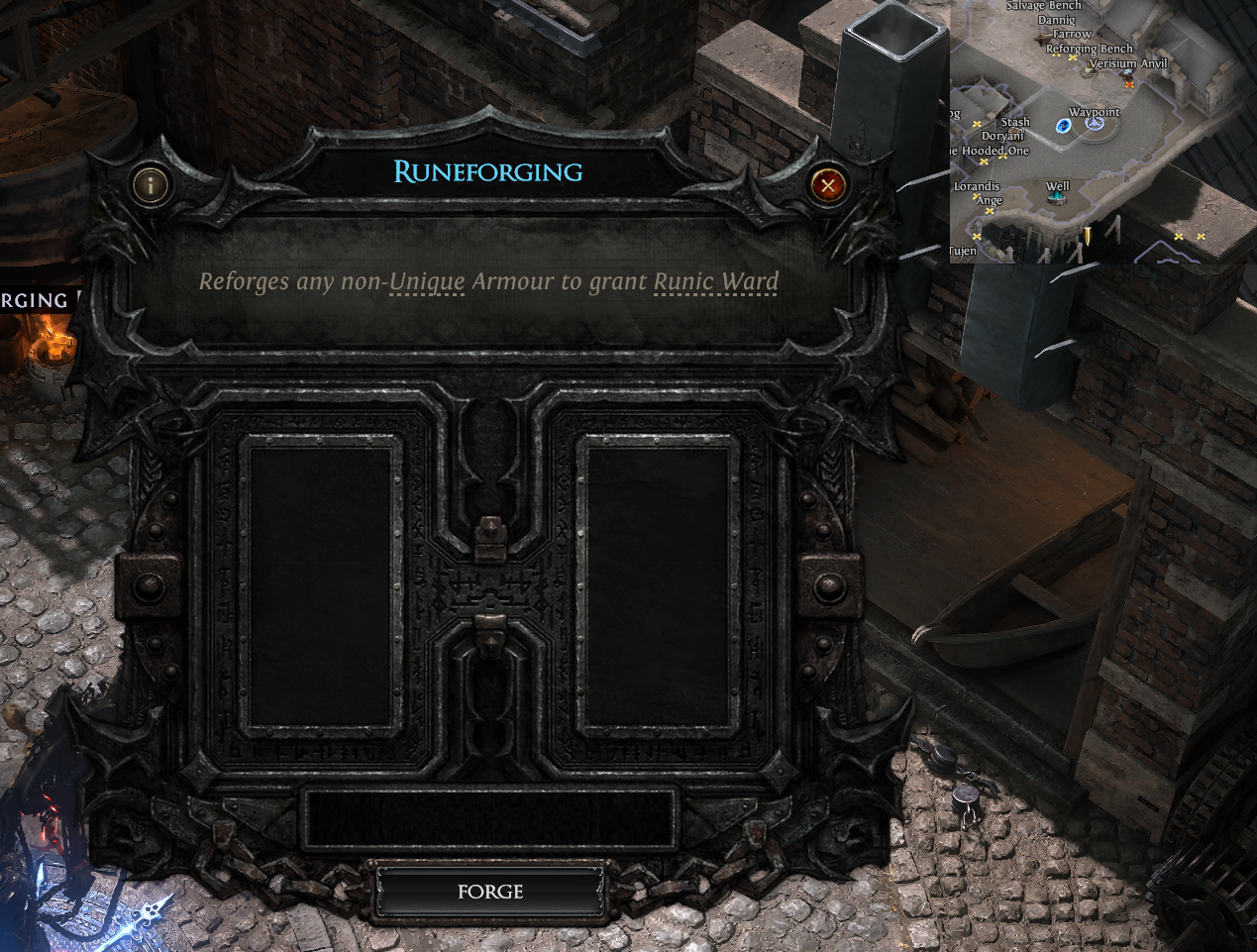
Your first unlock. Spend Verisium to add Runic Ward to any armor piece. This is where you start stacking defense. Apply Ward to every sub-level-55 piece without hesitation—it costs nothing and pads your health pool in the back half of the campaign. By the time you hit Act 2, you should have Ward on your chest, gloves, boots, and helmet.
Act 2: Runic Inscriptions
The second unlock, though less flashy than the others. This is when you begin interacting with runes more deeply, unlocking access to the broader runesmithing system. By this point, you've already seen 150+ runes across the league mechanic, so the theoretical foundation is there.
Act 3: Unique Runeforging & The Mystic Refuge
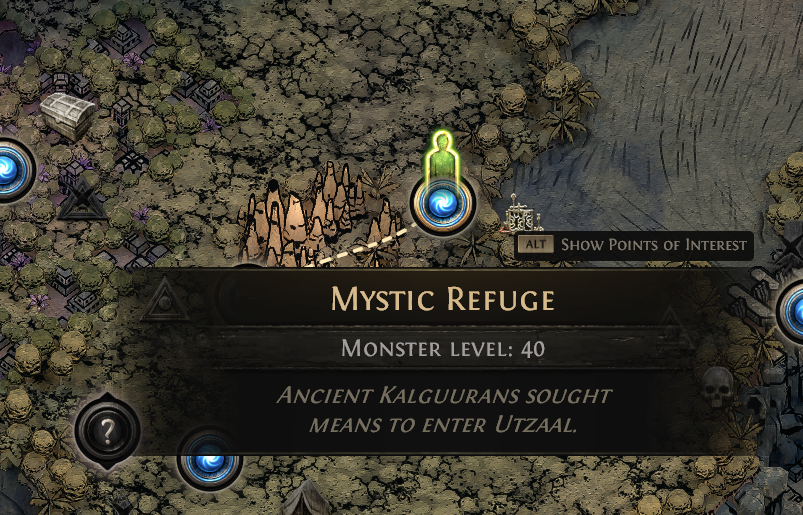
Here's exactly how to unlock it.
Step 1: Collect the Three Act 3 Runestones
Same pattern as Acts 1 and 2. Three Runestones, three zones. Hunt them down before anything else.
- Jungle Ruins — first Runestone
- Venom Crypts — second Runestone
- The Azak Bog — third Runestone
Each one is a fixed interact point in its zone. Not a boss fight, not a puzzle. Walk in, find the stone, interact. Move on.
Step 2: Return to the Infested Barrens
Once all three Runestones are collected, head back to the Infested Barrens. The entrance to the Mystic Refuge is here — tucked off the main path,
Step 3: Reach the End and Talk to Farrow
Navigate through the Mystic Refuge to the end of the area. Farrow is waiting. Speak to him. That's it — Unique Runeforging unlocks at the Verisium Anvil immediately.
Unique Runeforging lets you take any unique item with a base level below 55 and upgrade it to a higher base type — adding real stats and Runic Ward in the process. That Act 1 weapon with the broken mechanic you've been babying through the campaign? This is how it follows you into maps. Without this unlock, that entire system doesn't exist for you.
Understanding Runic Ward: Your Second Life Bar
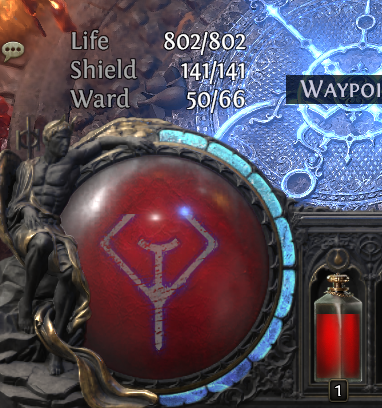
Runic Ward is the most significant defensive addition to PoE 2 since launch. It's a resource that activates after your Life is depleted. When your health hits 1 HP, incoming damage begins consuming Ward instead of killing you outright. It regenerates independently of life recovery, creating a genuine second health pool.
The mechanics are straightforward but the implications are massive:
- Ward absorbs damage only when you're at 1 HP. Full health? Ward doesn't protect you.
- Ward regenerates over time, separate from life recovery. You don't need life leech or regen to sustain it.
- Ward can also be spent as a resource to cast Kalguuran skills. This creates a tension: do you save Ward for defense or spend it for offense?
- Some unique items have special interactions. The Brass Dome, for example, replaces its entire armor value with a massive Ward pool.
Building Ward sustainably means prioritizing three stats: maximum Ward, Ward regeneration, and Ward recovery on kill. Stack Kalguuran uniques and Runic Ward runes. The Warding Rune of Bravado grants +1% to all maximum elemental resistances while you're on full Ward—a meaningful bonus that rewards not getting hit.
Verisium Farming: The Currency Loop
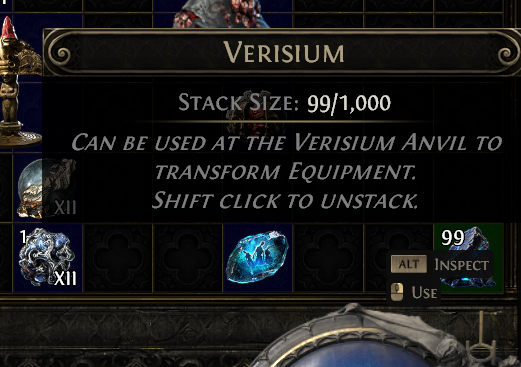
You need Verisium. Lots of it. Every Runeforged piece demands a Verisium investment. Fortunately, the farming loop is straightforward: engage with Ezomyte Remnants, kill the monsters they spawn, collect the drops.
Where Does Verisium Come From?
Three sources dominate verisium farming:
- Campaign Quests: Farrow's four campaign quests grant Verisium directly. Complete these before maps. They're mandatory.
- Remnant Encounters: Every zone in the Runes of Aldur league contains at least one Ezomyte Remnant. Killing monsters during a Remnant encounter drops Verisium metal. More slots = more waves = more Verisium potential, but also higher difficulty.
- Expedition Digsites: If you're running Kalguuran Expeditions, Remnants can spawn within digsites. The empowerments stack across the explosive line, making late-expedition Remnants brutally difficult but rewarding.
The practical loop: clear maps with high area level, hit every Remnant encounter, use the maximum Runeshape slots you can survive, collect Verisium and Alloys, then Runeforge your armor and upgrade target uniques. Repeat until your build is unkillable or you quit the league.
Verisium Farming Strategy: The 4-6 Slot Sweet Spot
Don't be greedy with Remnant slots. Early league, cap yourself at 4-6 slots. Each Runeshape slot adds one enemy wave with stacked runic modifiers. Fill all 10 slots and you're essentially running a gauntlet designed to kill you. Your build needs to sustain through three consecutive modifier-heavy waves without opening a portal. If it can't, you're farming inefficiently—you'll spend more time resurrecting than looting.
The math is simple: 4-slot Remnants are sustainable, reliable, and still drop meaningful Verisium. 6-slot Remnants are the ceiling for most builds until you're geared enough to laugh at the damage. 7+ slots? Only after your build can legitimately tank six enemy waves stacked with runic buffs.
Ezomyte Runesmithing: Crafting at the Remnants
Verisium Runeforging is one half of the crafting equation. Ezomyte Runesmithing—the actual Remnant interaction—is the other. This is where PoE crafts get complex.
Every Ezomyte Remnant is a portable crafting station with 2-10 slots. Insert Runeshapes (rune symbols you collect from maps and league content), and the Remnant offers you a list of predetermined Runic Recipes. Pick a recipe, fight the resulting waves, and receive the crafted item. The runes you choose determine both the craft output and the enemy difficulty. Better crafts = harder enemies. It's a risk-reward puzzle.
The 150+ Rune Breakdown
Patch 0.5 introduced over 150 unique runes. Here's the taxonomy:
- 13 Ancient Runes: Weapon-type-specific bonuses. Rune of Prowess on spears grants 25% chance to gain a bonus Frenzy Charge. Rune of Splinters on bows adds 50% chance to fire an extra arrow.
- 13 Mythical Runes: Early-game power spikes. Rune of the Prism grants elemental resistances. Rune of the Blossom grants spirit. These drop off in value as you level but are invaluable for league-starting alts.
- 15+ Runic Ward Runes: Directly scale Ward mechanics. The Ward Rune adds flat Ward. Others improve regeneration, recovery on kill, or unlock special Ward interactions.
- 15 Meta Crafting Runes: The endgame levers. These are equivalent to PoE 1's meta-crafting and control which modifiers can roll on items. Late-league crafting lives here.
- 60+ Unique-Destruction Runes: Feed a unique item into one of these runes, and the rune inherits some of its properties. Destroy a Trampletoe, create a Legacy of Trampletoe rune. Socket it into any boots and gain 10% overkill damage to nearby enemies. Finally, a use for that trash unique in your stash.
- 3 Fluxes: Convert elemental resistances from one element to another. Niche. Occasionally invaluable.
There's also Aldur's Legacy, a special rune that destroys a Kalguuran or Ezomyte unique and extracts one modifier as a socketable rune. That mediocre unique with one insane affix? Now you can socket that affix into your best-in-slot rare. This is where uniques stop being dead weight and start being crafting fuel.
Runic Ward Runes: Scaling Your Second Life
If Runic Ward is your second health bar, Runic Ward runes are the scaling nodes. There are 22 dedicated runes for adding or modifying Ward mechanics. These runes let you either add flat Ward, improve regeneration rates, or unlock offensive uses through Kalguuran skills.
The strategy is straightforward: prioritize Ward runes early, stack them aggressively, then balance Ward pool with your life and Energy Shield. Running Kalguuran skills without sufficient Ward recovery is a fast way to discover that your "second life" is already spent before the boss phases into its second form.
Unique Runeforging: Bringing Leveling Uniques to Endgame
This is where Runeforging becomes genuinely revolutionary. For the first time in ARPG history, a cool level 11 bow or level 15 gloves can follow you into red maps.
How Unique Runeforging Works
Unique items below item level 55 can be upgraded to endgame-relevant bases. A level 11 Ironbound (unique boots with a powerful mechanic) can be reforged into a level 80+ base while retaining its unique properties. Low-level uniques with insane mechanics—Facebreaker, Trampletoe, Kalguuran-themed uniques—are no longer obsolete by Act 5.
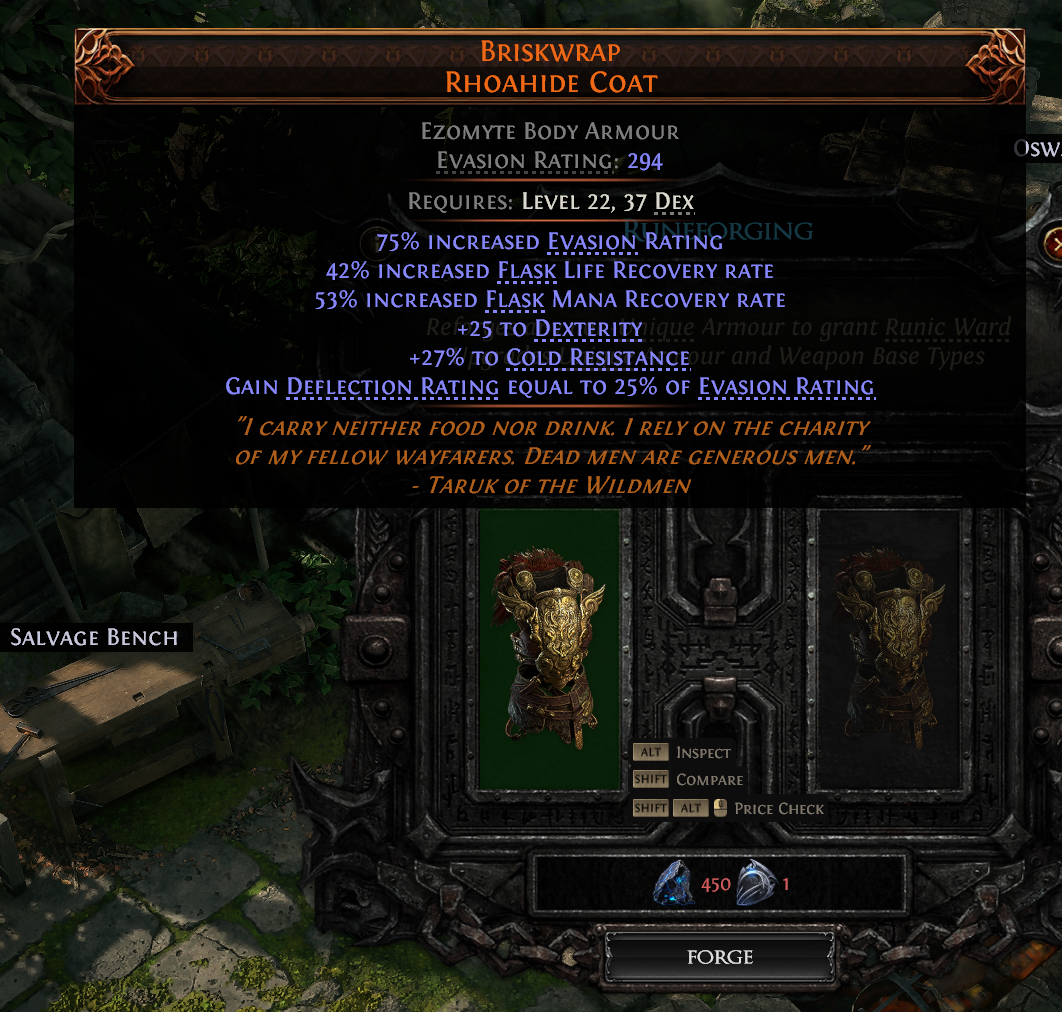
Higher-level uniques (ilvl 55+) can also be Runeforged, but the trade-off is steeper. They gain Runic Ward but lose some base defenses. Some uniques have special interactions. The Brass Dome fully replaces its armor with a massive Ward pool, making it one of the most efficient Ward sources in the game.
Kalguuran Uniques: The Standouts
Kalguuran uniques are the poster children for Unique Runeforging. These items receive additional properties or modified effects when Runeforged, making them disproportionately powerful. If you find a Kalguuran unique early, hold onto it. It's probably worth upgrading.
The Alloys System: Surgical Crafting
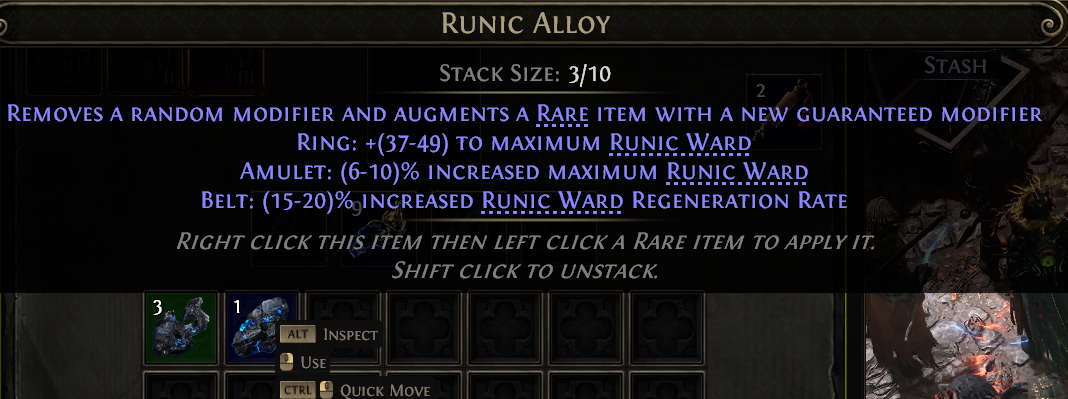
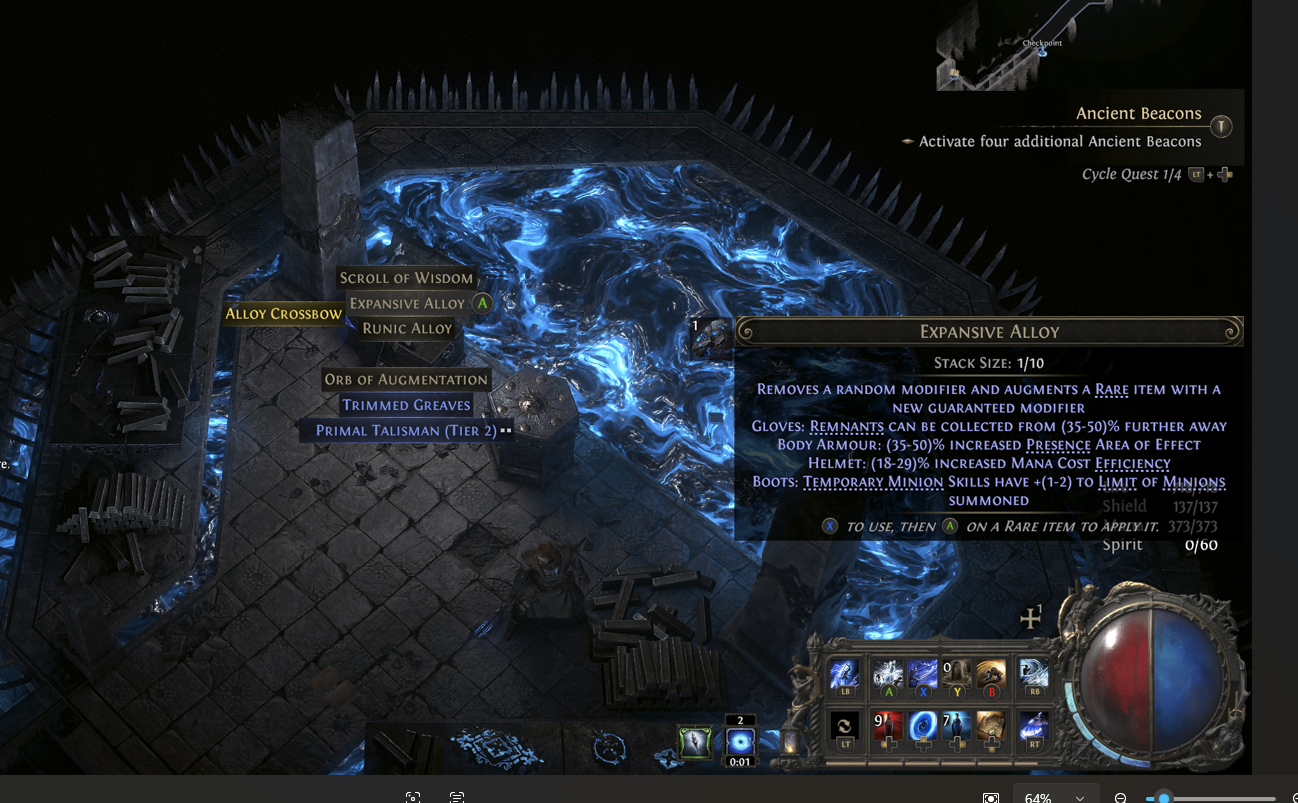
Alloys are the companion system to Runeforging. Where the Recombinator was chaotic gambling, Alloys are targeted surgery. There are 13 new Alloy types in patch 0.5. Each one removes a random property from a rare item and adds a specific guaranteed property unavailable through normal crafting.
Think of them as the answer to "I need this one specific mod and I don't want to chaos spam for 500 attempts." Use Alloys to remove bad suffixes and add the mods you actually want. Combined with Meta Crafting Runes, Alloys shift crafting from chaotic gambling toward something approaching actual strategy.
Campaign Progression: The Runeforging Path
Here's the optimal progression path through the campaign with Runeforging in mind:
Act 1: Unlock and Apply Armor Runeforging
Meet Farrow, complete his quests, unlock the Verisium Anvil. Start Runeforging the moment it's available. Any armor under level 55 wants Ward on it immediately—it costs you nothing and it pads every fight in the back half of the campaign. By the end of Act 1, your chest, gloves, boots, and helmet should all be Runeforged.
Act 2: Farm Verisium, Stack Resistances
Hit 75% on all three elemental resistances before T6 maps. Non-negotiable. Map damage will kill you in two hits without it. Life pool is irrelevant under-capped resistances. Continue engaging with Remnants for Verisium. Upgrade your weapon first—damage scales everything. A dead monster doesn't hit back.
Act 3: Find the Mystic Refuge, Unlock Unique Runeforging
The Mystic Refuge is hidden in the Act 3 jungles, not on the critical path. Explore or miss it forever. This unlock lets you upgrade low-level uniques into endgame pieces. Runeforge any leveling uniques you've been carrying. Cost: Verisium. Result: viable endgame pieces that scale with your build.
Maps: Scale Remnant Slots, Optimize Atlas
Begin using Unique Destruction Runes on junk uniques to extract modifiers worth socketing. Stick to 4-6 slot Remnants until your build can handle higher difficulty. Prioritize league mechanic nodes on the Atlas Passive Tree first—quantity and waystone bonuses are multipliers that amplify a working loop, not create one.
Common Runeforging Mistakes and How to Avoid Them
- Mistake 1: Runeforging high-ilvl items too early. Items above level 55 lose base defenses for Ward. Early campaign, you don't need Ward—you need defenses. Wait until endgame to Runeforge your ilvl 70+ gear.
- Mistake 2: Greedy Remnant slots. Filling 8-10 slot Remnants before your build can handle six enemy waves stacked with runic modifiers is a fast way to die repeatedly and waste time. Farm efficiently at 4-6 slots instead.
- Mistake 3: Ignoring Unique Destruction Runes. That trash unique in your stash? It's crafting fuel. Extract its best property and socket it into your best-in-slot rare. This is where Aldur's Legacy shines.
- Mistake 4: Not balancing Ward with life and Energy Shield. Ward is a second life, but it doesn't replace actual defenses. Stack life, cap resistances, layer on Ward. All three matter.
- Mistake 5: Spending Divine Orbs on uniques in the first 48 hours of league start. Prices will shift after patch notes settle. Whatever is hyped at league start is usually overpriced by 40%. Wait for the market to stabilize.
The Runes of Aldur Economy: Early League Opportunities
The 0.5 economy is fresh. Basic materials flood the market in the first week, prices crash, then stabilize. Expect early spikes on Verisium, high-tier runes, Runic Ward gear, and Runic Alloys. Divine Orbs are more common this patch. Greater and Perfect currencies are rarer—price them accordingly if you find them.
The window for early profit is open for about 48-72 hours before prices stabilize. Use it or don't, but don't pretend you didn't know. The best league start strategy remains what it always was: don't die, fix resistances, and stop buying items you don't need yet.
Endgame: The Fortress and Beyond
After campaign completion, progression flows through The Fortress, a new endgame hub that rises after completing your first Precursor Tower map. All endgame progression, including the expanded Atlas Passive Skill Tree with 300+ nodes, flows through here. Treat it as mandatory, not optional content.
The Masters of the Atlas system grants asymmetrical Ascendancy-style bonuses. Ally with NPCs like Jado (Djinn Order) or the monster hunter Hilda. Each Master has 12 talent nodes—you can have 4 active at once. Swap them between map runs to optimize your farming strategy. This is where endgame PoE crafts truly come alive.
Final Thoughts: Runeforging Changes Everything
Patch 0.5 didn't just add a new crafting system. It rewrote how you think about defense, gear progression, and character building. Runeforging transforms leveling uniques into endgame pieces. Runic Ward provides a genuine second life. The 150+ rune system offers unprecedented customization. For the first time, PoE 2 crafting feels less like gambling and more like actual strategy.
Whether you're a veteran min-maxing endgame gear or a new player just hitting maps, the Runes of Aldur league is worth your time. Master Runeforging, stack Runic Ward, and you'll be unstoppable.
Câu hỏi thường gặp về Path of Exile 2
- Ngày phát hành Path of Exile 2 là khi nào?
- Path of Exile 2 dự kiến phát hành vào ngày 6/12/2024.
- Path of Exile 2 chơi được trên nền tảng nào?
- Path of Exile 2 hỗ trợ: Xbox Series X|S, PC (Microsoft Windows), PlayStation 5, Mac.
- Path of Exile 2 thuộc thể loại gì?
- Path of Exile 2 thuộc thể loại: Role-playing (RPG), Hack and slash/Beat 'em up, Adventure.
- Có trailer chính thức của Path of Exile 2 không?
- Có. Bạn có thể xem trailer của Path of Exile 2 ngay trên trang này ở phần video.
Khám phá thêm
PoE 2 Patch Notes 0.5.2 Summary: Every Change That Matters for Your Build
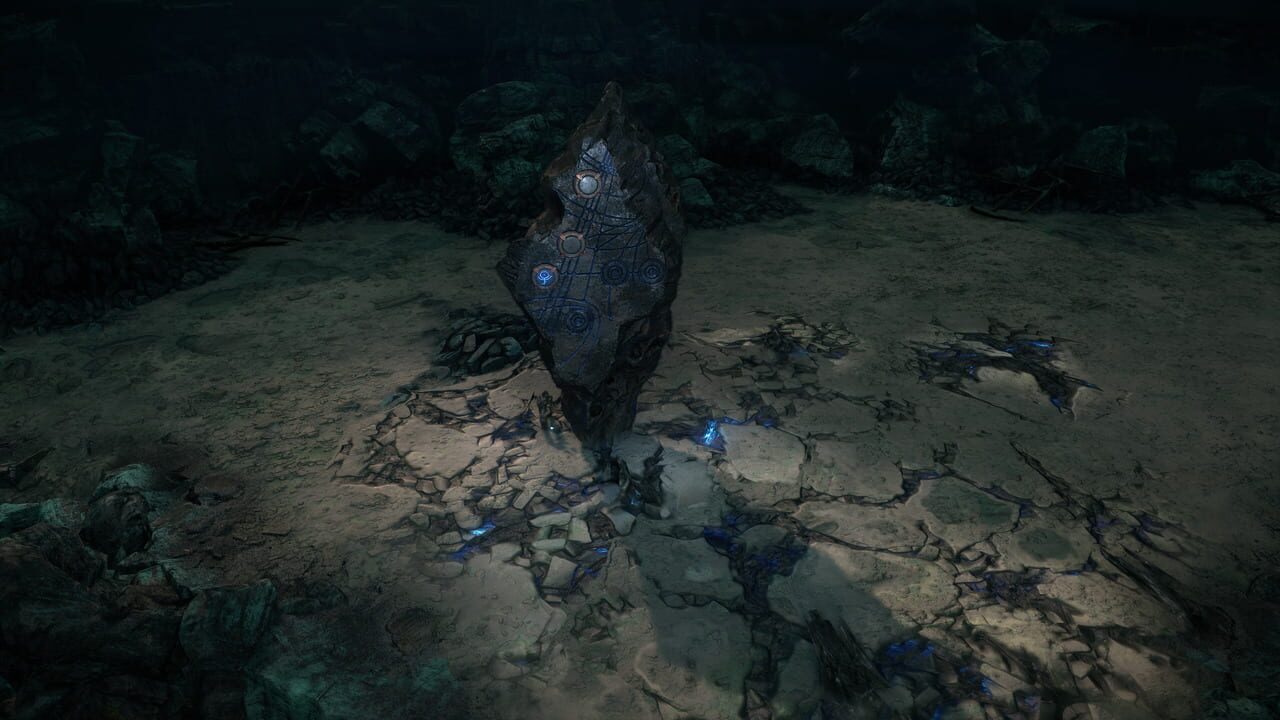
Path of Exile 2 patch 0.5.2 dropped on June 12, 2026, and it's one of the more player-friendly mid-league updates GGG has put out. Delirium got easier, Runes of Aldur rewards got better, a wave of monsters got their damage tuned down — and there was a brief, chaotic moment where Gemling Legionnaire nearly got quietly gutted before GGG walked it back. Here's everything that actually matters for your build.
PoE 2 Runic Support Gems: Reddit's Best Builds & Scaling Tips (Patch 0.5)
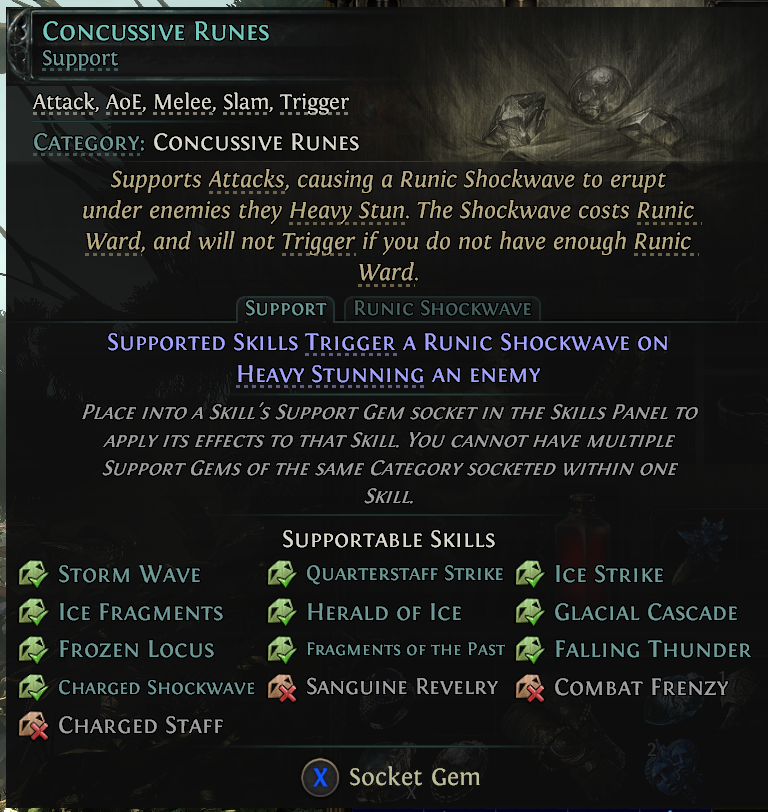
Patch 0.5 introduced Runic Support Gems that let any class use any skill. Discover Reddit's best builds, Runic Infusion scaling strategies, and how to optimize Ward-based damage for endgame.
Path of Exile Reddit: Runic Skills, Builds & Community Troubleshooting Guide
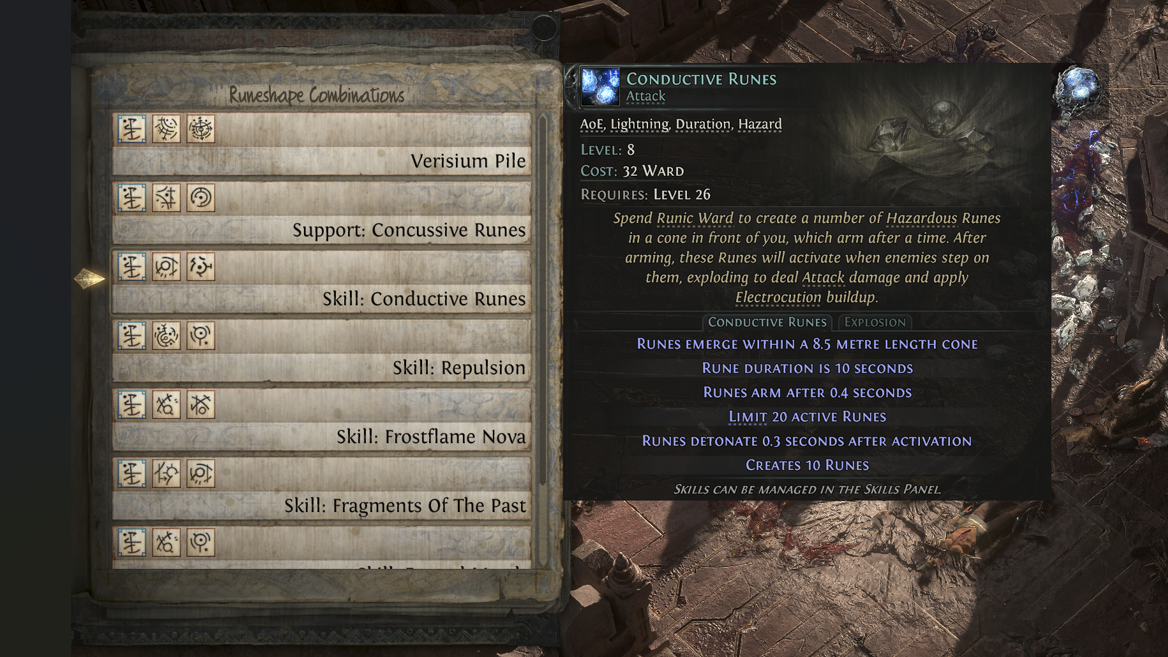
Path of Exile Reddit has dissected the new Runic Skills system since Patch 0.5. This guide pulls together the community's best tips, proven Kalguuran builds, and troubleshooting advice for Ward optimization and Runic skill mechanics.
PoE 2 Reddit: Runic Skills Explained – What You Need to Know About Kalguuran Abilities & Runic Ward
Complete guide to PoE 2 runic skills, Kalguuran abilities, and Runic Ward mechanics. Learn how Reddit players scale these new resources and build effectively.