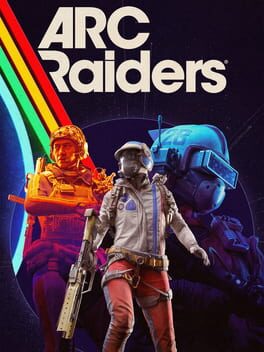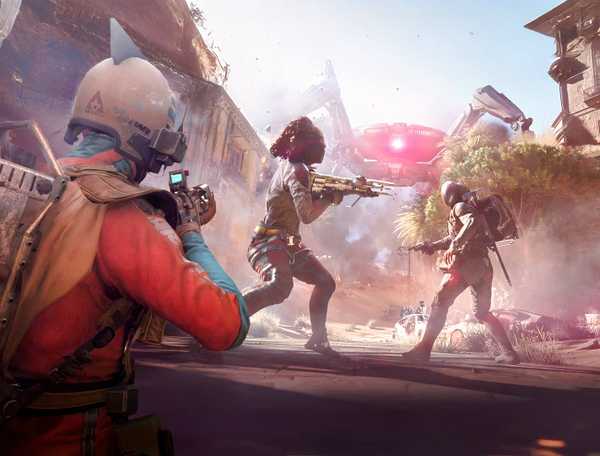
ARC Raiders is starting to reveal something unexpected about its players, and the results feel less like a shooter and more like a social experiment.
ARC Raiders is an unscripted PvPvE extraction shooter, where players emerge onto a large map with their goals in mind, even if those goals don't line up with anything the game outright calls for. It's tense, it's unpredictable, and the stories that players experience are largely narratives of their own writing. Every raid feels like its own little pressure chamber where players reveal how they think, how they react, and what they value when everything is at stake. As a result, ARC Raiders seems to be behaving less like a traditional extraction shooter and more like a living study in human behavior.
Alliances form under the pressure of ARC Raiders' solo rounds, in particular, only to crumble to pieces in sudden moments of mistrust or opportunity. Factions have formed, even though they aren't an official feature in the game, nor are they anywhere to be found in its lore, and some players have entered raids completely empty-handed just to see how others respond. Finally, perhaps most infamously, some players have been known to treat even the most harmless Raider as a potential threat worth eliminating before a "Don't shoot!" emote can even be triggered, resulting in a loud and frequent outcry for the extraction shooter to add a PvE-only mode or a bounty system to discourage "unfriendly" play. Now, after over a month since its launch, ARC Raiders is looking more and more like something of a massive social experiment rooted in the unpredictable behavior of its community.
One of ARC Raiders' core lessons, as shown in the game's loading screen tips and in its "Introduction to ARC Raiders" trailer, is "Trust your gut," and there is arguably no statement more descriptive of the extraction shooter's philosophy than that. While there are hard rules to its core gameplay mechanics like gear loss, crafting, and matchmaking, the social side of ARC Raiders has no such rules. Alliances with players are not guaranteed, nor do they promise a round-long partnership. Downing a massive machine alone, only to have another player swoop in for some easy loot is not only possible but almost encouraged by the game's low standard for what counts as foul play. Just about anything goes in ARC Raiders, and that's ultimately what makes it one big test of human behavior.
Every round in ARC Raiders is like a 30-minute game of CBS' Survivor, where the main rule is "Outwit, outplay, and outlast"—essentially, "Do whatever it takes to make it out alive." Survivor has long been called a social experiment itself, simply because its players spend the entire game putting themselves at the mercy of others who may or may not prove trustworthy in the end. When the show started, alliances formed, not because it was written in the official Survivor rules, but because players realized it was a more efficient way of surviving than attempting to go it alone. Through each season thereafter, it became increasingly evident that alliances are never guarantees, and that some players will use another player's naivety to take advantage of them and betray them when the opportunity strikes.
The same can now be said of ARC Raiders, despite the outcry for a bounty system or a PvE-only mode. When the game first launched, players quickly noticed how friendly the community was, as everyone was still trying to learn the ins and outs of its world, the threat of the ARCs that patrolled it, and the layout of each map, so they generally shied away from conflict with other Raiders. However, as the community gained more experience, reports came flooding in that players were more hostile than ever before, shooting on sight or camping at extraction points in a desperate attempt to rob someone else of their hard-earned loot. During ARC Raiders' lifespan, that has only continued to ebb and flow depending on who is playing and what stage of the game they are in.
Even factions, though formed from a mostly humorous confrontation between content creators TheBurntPeanut and HutchMF, emerged less than a month into ARC Raiders' life. Factions aren't even a real part of the game's mechanics, but players still embraced the idea as if it were canon. Raiders began identifying themselves as members of one group or another, partly for fun and partly for the sense of belonging that comes from picking a side. What followed was an unexpected surge of social identity in a game that presumably never planned for one, complete with uniforms for each faction. That alone speaks volumes about how ready and willing players are to create their own structure when the game refuses to provide one.
Moments like these have become some of the clearest signs that ARC Raiders is operating on an entirely different level than most extraction shooters. Even cheating, despite BattlEye preventing legitimate cheating, is something largely defined by the community, not the game itself. What one player might consider fair play, another might consider unfair. As the saying goes, "That's the nature of the game," and when the game is ARC Raiders, there's almost no clear, objective definition of what that even means.
Now, it seems players are finally learning ARC Raiders' hardest lesson: trust no one. In a world without rules, the only person that really matters at the end of the day is the person behind the controller or the keyboard, and while that might anger a lot of the players who would prefer it if ARC Raiders abandoned PvP altogether, it's nonetheless a truth embedded in the game's player-driven design. Not only did Embark choose not to go the PvE-only route because the game ended up being too empty and bland, but the social instability of it all is what makes it such a tense and harrowing experience. Players already know they can't trust the machines; they know those machines have no prejudice whatsoever. But when it comes to other Raiders, none of that is guaranteed—and that's what makes the experience so exciting, for better in some eyes and for worse in others.
Bản xem trước mở rộng – Nội dung chưa đầy đủ.